
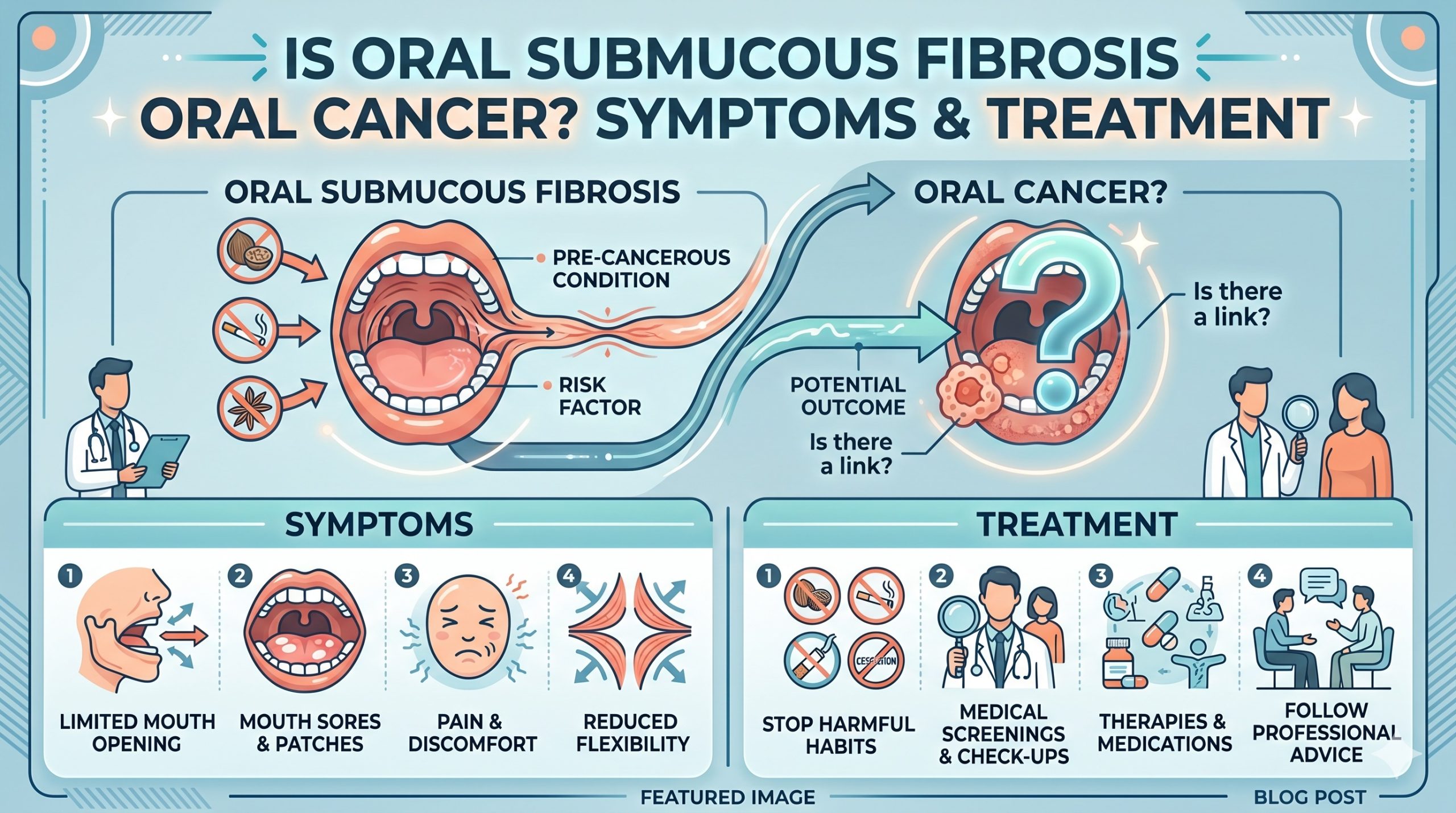
Oral diseases usually include various problems or ailments related to teeth or gums that are very common among people across the world. However, several other oral diseases can cause serious health issues. Oral submucous fibrosis (OSMF) is one of them that slowly tightens and hardens the tissues inside the mouth, making it difficult to chew or consume foods.
And if it is ignored and untreated, it can cause oral cancer. So, right here we are going to discuss about this serious oral problem (OSMF), what its causes and symptoms are, whether it is cancerous and how to cure the OSMF with the best treatment for oral submucous fibrosis.
Also Read: Which is Better Dental Implants or Dentures?
What is Oral Submucous Fibrosis?
Oral submucous fibrosis or OSMF is a chronic oral condition that affects the mucous lining of the mouth, characterised by stiffness of the oral tissues. Once such conditions happen, you will face difficulty in opening the mouth with a burning sensation and feeling of pain while eating or speaking.
A serious oral condition affects the cheeks from inside with a progressive process hardening the tissues of the mouth that makes it very difficult to speak, chew food and feel pain. Though there are various reasons behind the OSMF, chewing of areca nut (betel nut) and tobacco products are the main causes.
What Causes Oral Submucous Fibrosis?
It is a disease caused by a chronic malignant condition that is usually caused by chewing the areca nut or betel nut (Supari in Hindi) or other tobacco based products. The arecoline in the nut causes excessive collagen production, and other ingredients like copper harden the tissues, causing such symptoms.
The main chemical, arecoline, when it enters the system, triggers the body to produce more collagen that is usually broken down and replaced, but excessive or constant chewing builds up, causing the OSMF. On the other hand, smoking and consuming alcohol increase the risk and accelerate tissue damage.
Submucous Fibrosis Symptoms
Sometimes at the initial stage, no such sign or symptoms are visible among such patients, but when it grows, you can notice various symptoms of OSMF as discussed below.
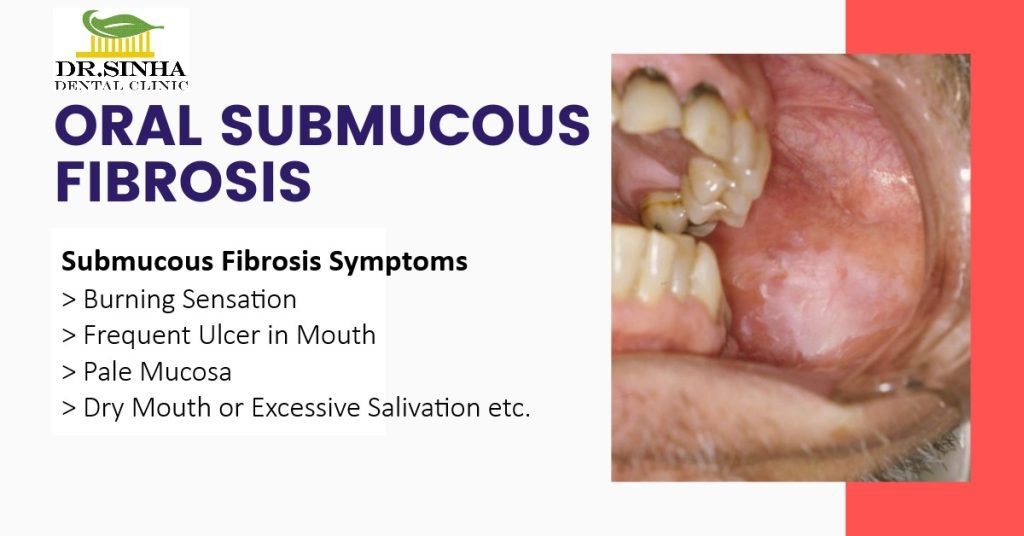
Burning Sensation: This is an early sign that most people notice when submucous fibrosis starts. And you can feel such a burning sensation in your mouth, especially when consuming spicy food.
Frequent Ulcer in Mouth: Recurrent ulcer or blister-like lesions in the mouth are another symptom of OSMF. Though such ulcer may appear and disappear, but it can be a sign of OSMF.
Pale Mucosa: When you see the inner lining of the mouth become pale or light yellow or white, showing a veined appearance, it could be an indication of the OSMF.
Dry Mouth or Excessive Salivation: If your mouth has more than required saliva or becomes frequently dry (xerostomia), you should not ignore it, as it could be a signal of oral submucous fibrosis.
Cheek Tightness or Stiffness: This is one of the most indicative signs of this oral disease. Yes, when you feel tightness or a reduction in the flexibility in your cheeks, it could be a symptom of OSMF.
Less Wide Mouth Opening: It is an advanced symptom of OSMF, but progressive in nature. When you are not able to open your mouth properly or widely, with restricted stretch, it is a signal of this oral disease.
White Patches or Leukoplakia: Though it is an early sign, it should never be ignored, as it could be a serious indication of oral submucous fibrosis.
Reduced Tongue Mobility: When you face difficulty moving your tongue or feel reduced mobility. However, there are various other similar symptoms you can use to detect the submucous fibrosis.
How to Detect Oral Submucous Fibrosis?
To detect oral submucous fibrosis, you can keep in mind various symptoms listed above. However, to confirm the same, you need to go through a test or clinical examination by a medical expert, such as a dentist or an oral cancer specialist, who can better understand and diagnose this disease.
Apart from early to advanced symptoms like pale mucosa, reduced mouth opening, stiff tongue and lips, burning sensation and xerostomia with a history of areca nut chewing, there are various diagnostic procedures that can be performed to detect the oral submucous fibrosis.
Biopsy and Ultrasonography are the popular diagnostic procedures used to detect the OSMF. And one of the best advantages of going through the diagnostic procedure is that when you go through these medical tests, it will help to know the stage of oral submucous fibrosis.
Oral Submucous Fibrosis Staging
Usually, the oral submucous fibrosis divided into four stages, which are characterised by the oral situation of the mouth and the malignant condition of the cheek. Based on the history of areca nut or tobacco habits and the clinical symptoms, it is classified into four stages.
Oral Submucous Fibrosis Staging Clinical Features:
Stage 1 (Early): At this stage, a patient can feel inflammation with excessive salivation and blanching of the oral mucosa. While the slightly reduced mouth opening (>35 mm or >30 mm, depending on the classification system) could be considered normal.
Stage 2 (Moderate): In this stage, along with the reduced mouth opening (between 20–35 mm), palpable fibrous bands appear in the buccal mucosa and/or oropharynx.
Stage 3 (Advanced): When submucous fibrosis is a severe condition, featuring stiff vertical bands limiting the mouth opening (between 10–20 mm), or the patient is facing a problem while eating or speaking.
Stage 4 (Very Advanced): This is a critical stage of oral submucous fibrosis in which mouth opening is restricted to less than 10–15 mm. And in this stage, 4A shows there is potential for malignant disorders like leukoplakia or erythroplakia, while in stage 4B, it means confirmed oral carcinoma (cancer).
Is Oral Submucous Fibrosis Cancer?
Though oral submucous fibrosis is not considered cancer, it is a precancerous or potentially malignant condition of such critical disease. But it is a progressive disease with a chronic history of chewing areca nut and tobacco with burning sensation, stiffness in the cheek, pale patches in the mouth and reduced mouth opening.
Initially, it is not cancerous, but if it reaches the fourth stage or third stage and left untreated, there is a significant risk of turning the OSMF into oral cancer, which is also known as squamous cell carcinoma.
Who are at the Risk?
Anyone having the habit of regularly chewing the betel quid, areca nut or betel nut is mostly at risk of Oral submucous fibrosis. Middle-aged people with a history of long years of chewing such nuts can have this oral disease, and if diagnosed at the third or fourth stage, it could be cancerous.
However, adults and young people who start chewing such products are also affected by the OSMF. And if ignored or not cured in a timely manner, with a progressive chronic history, it could become an oral cancer for anyone seriously affected by the various symptoms of OSMF.
How to Cure Oral Submucous Fibrosis?
One of the best ways to cure this disease is when you notice any early sign of OSMF, you should immediately stop the habit of chewing the betel nuts or any such tobacco-based products. At the initial stage, you can control the growth of OSMF by improving your food eating habits, like adding various nutritious foods to your regular diet and follow try the natural treatment for oral submucous fibrosis.
Natural Treatment for Oral Submucous Fibrosis
To cure the early stage of OSMF, you can use Aloe Vera, Turmeric, Triphala, Spirulina, Lycopene and Ginkgo Biloba or Green Tea. Apart from this, you also need to maintain your oral hygiene and add vitamins A, C, and E-rich foods to your regular diet to promote healing.
Meanwhile, to avoid the burning sensation around the affected area or triggering of burning in your mouth, you need to avoid consuming abrasive, hot or spicy food items. And if it has not healed with these natural remedies, you need to get the special treatment to cure the OSMF.
Best Treatment for Oral Submucous Fibrosis
The treatment of oral submucous fibrosis is based on the oral condition and stage of the OSMF. From steroids and hyaluronidase injections to physiotherapy and surgery, the treatment is recommended as per the condition of submucous fibrosis in the mouth.
Complete Quitting of Chewing Habit: Whatever the treatments of medicine you take to cure the OSMF, if you don’t quit the chewing of betel nuts and similar products completely, it cannot be cured.
Intralesional Injections: These injections contain the corticosteroids combined with hyaluronidase, which helps to reduce the inflammation and soften fibrous bands.
Nutritional Supplements: The doctor will also recommend natural supplements and antioxidants such as Lycopene, Curcumin, and Aloe vera, along with Vitamin A, B-complex, and C to support the healing process.
Physiotherapy: Exercising your mouth daily using the tongue depressors, props, or specialised devices or simply without such devices, will help to improve the mobility and a slight improvement in the mouth.
Oral Surgery: The surgical process is done when the oral condition is severe or when the mouth opening reduced to less than 15 mm. In this process, the oral surgeon removes the fibrotic bands and uses various techniques like buccal fat pads, nasolabial flaps, or grafts to cover the affected area. However, in some cases, low-level laser therapy is also used to treat this oral disease in the severe conditions.
Conclusion
Oral submucous fibrosis is not a cancer; it is an oral disease caused by regular habit or chewing the areca nut and can be cured with early-stage detection. However, people with progressive OSMF with a chronic history of chewing the betel nuts or areca nut and similar tobacco-based products that contain arecoline can cause cancer, especially if it is ignored or untreated in a timely manner.
Leaving the habit of chewing areca nut, adding various food supplements enriched with Vitamin A, C, and E, and physiotherapy can easily cure theoral submucous fibrosis. But for the timely diagnosis and right treatment of the same, you need to visit your nearest best dentist in Greater Noida. Here, the dentist will diagnose the oral condition of your mouth and recommend the suitable treatment.
