
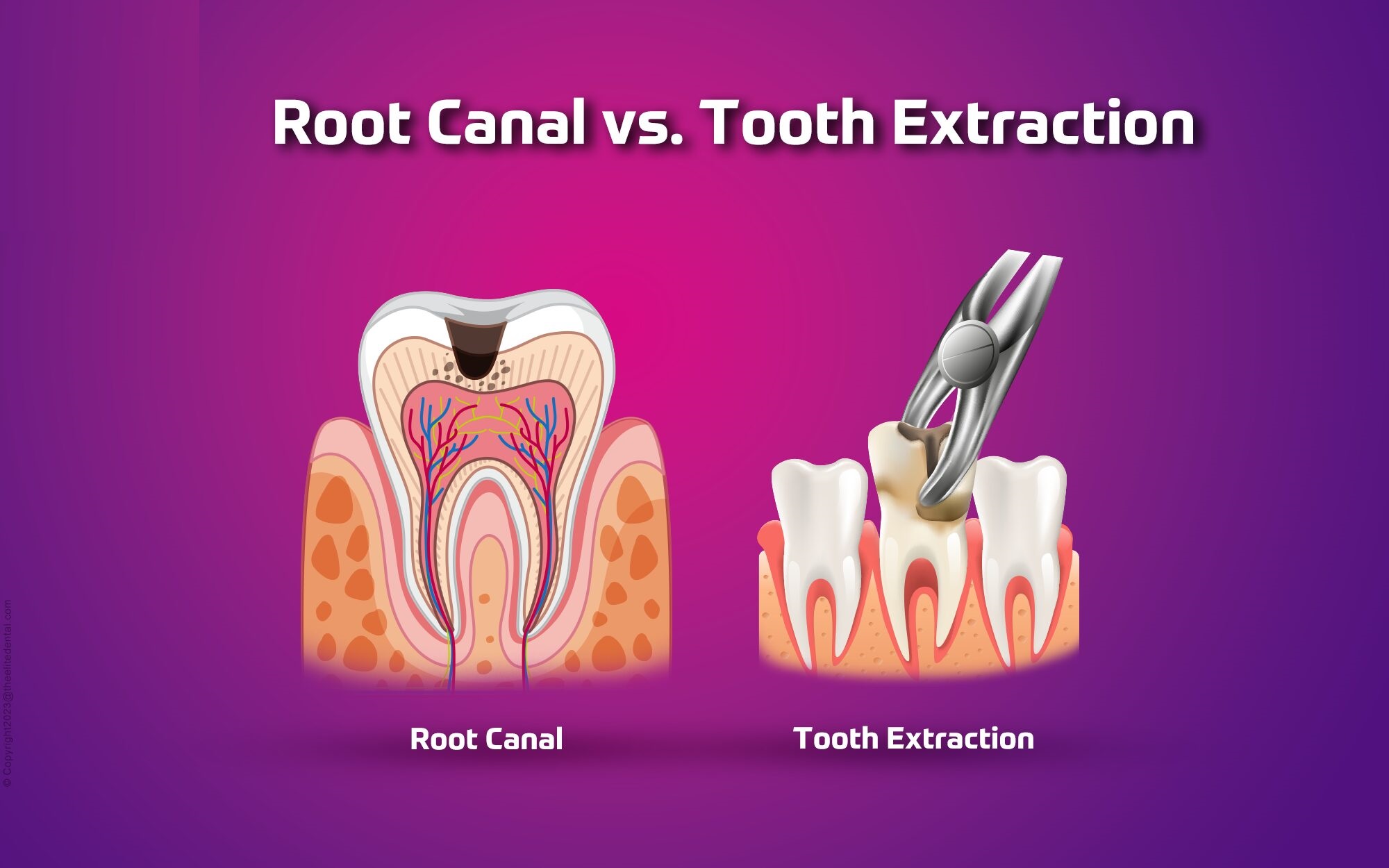
When your tooth nerve is damaged or not able to survive with filling or using any other dental procedures, you might think of removing the tooth from your mouth. However, losing the original tooth would be not only painful but also distressing due to losing the original one that can’t be replaced by an artificial tooth.
In such situations, if you don’t want to lose your tooth, the dentist will recommend you to get the root canal treatment (RCT), which can help you save your tooth. However, a few people still get confused about whether RCT can save their tooth or if removing the tooth is the permanent solution.
What is Tooth Extraction?
Tooth extraction or removal is the process of permanently removing the damaged or badly infected tooth from its socket in the jawbone. The dentists or dental surgeons perform this process using advanced tools to make sure it comes out completely from the roots, so that later on, a new tooth can be implanted.
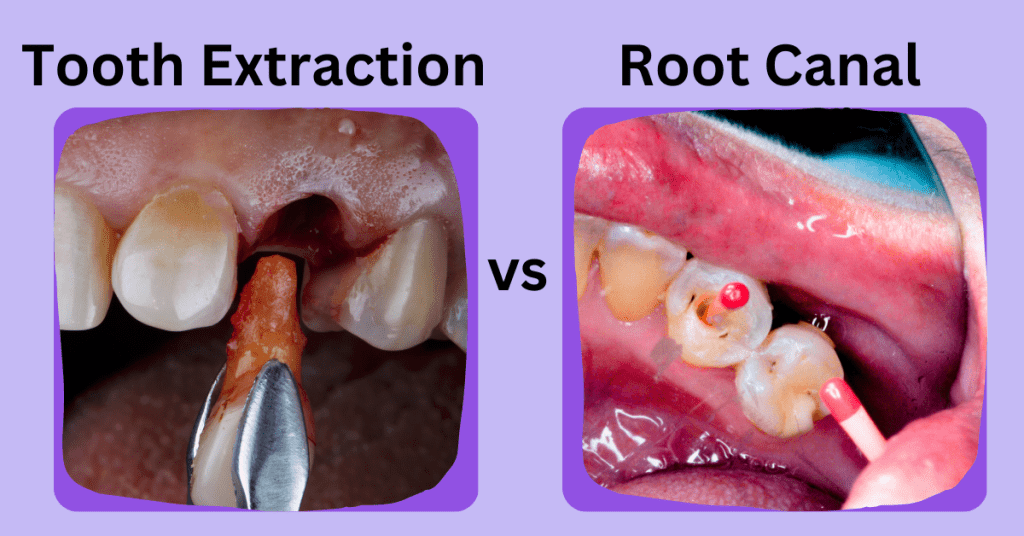
It is a simple and one-time visit dental treatment procedure, in which a dentist uses local anaesthesia to numb your gums around the tooth and extract the tooth. And after that, the surgical area is sterilised and cleaned properly to prevent any infection, with medicines prescribed to heal the surgical area.
What is Root Canal Treatment?
RCT is one of the most critical dental procedures used to prevent badly infected or damaged teeth. In this dental treatment process, the infected and inflamed pulp (nerve) is removed from inside the tooth, and then cleaned, and the inner chamber is disinfected to prevent the infection.
Also Read: 5 Signs of Infection Not to Ignore After Root Canal Treatment
Lastly, the suitable material is filled and sealed inside the space to make it strong and prevent any further infection. Basically, in RCT, the tooth nerves are permanently disconnected from the tooth so as not to feel any pain or discomfort while making it usable like a normal tooth.
Also Read: Top 10 Frequently Asked Questions About Root Canal Treatment
Root Canal vs Extraction Pros and Cons
RCT and tooth extraction both have their own advantages and disadvantages. Let’s find out the pros and cons of both of them, so that you can decide which is better for you.
Root Canal Treatment Pros and Cons
Pros:
- Getting the RCT to save your tooth will not only help you to save your precious tooth but also provide you with a natural tooth-like appearance with long-lasting performance.
- It also prevent tooth from any further infection, cavity and risk of feeling the sensitivity. As the tooth nerves are disconnected, you will not feel any kind of sensation in your RCT-cured tooth.
- Apart from providing the natural chewing, biting and speaking experience, RCT also prevents your jawbone from weakening.
Cons:
- RCT is a critical and time-consuming dental procedure that requires multiple visits to the patient to complete. Compared to extraction, RCT need more time to recover or heal the treated area.
- And because of a complicated dental procedure, the cost of RCT is very high compared to tooth extraction. Some people can’t afford the cost of RCT, hence they prefer extraction.
- Due to a complicated surgical procedure, sometimes RCT need further treatment if an infection erupts or the patient faces any kind of other complications due to this dental process.
Tooth Extraction Pros and Cons
Pros:
- In dentistry, after tooth cleaning, it is one of the simplest and least complicated dental procedures. It can be performed and completed in one visit.
- Once your infected tooth is permanently removed, you don’t need to worry about the infection, decay or cavity in that tooth, as there is no place left to attract bacteria on the extracted tooth.
- The most interesting and beneficial point of tooth extraction is that the cost of treatment is much less compared to RCT, making this dental treatment affordable to everyone.
Cons:
- Removing the tooth will reduce your ability to chew or bite food with fewer teeth. And if your front tooth is extracted, you will lose confidence while speaking or smiling publicly.
- Tooth extraction has various side effects, as it can cause the surrounding bone to deteriorate over time, and a few people face a weak eyesight problem after tooth extraction.
- Removing the front tooth is easier, but removing molars or backside teeth is more complicated, making it difficult not only for dentists but also painful for the patients.
- And to get the net tooth after extraction, you can opt for a dental implant or a dental procedure that requires additional treatment costs.
Also Read: When to Get Dental Implants or after Tooth Extraction
Root Canal Treatment or Remove Tooth, Which is Better?
The tooth extraction is the dental procedure followed to remove the damaged tooth from the roots. The dentist will perform the surgical process to numb the gums around the diseased tooth and use the tools with the right technique to extract the tooth from the roots.
On the other hand, RCT is the critical dental procedure to treat the tooth and make it usable for biting and chewing food. Though it is a more critical, time-consuming and expensive dental procedure, it can save your tooth without facing any problem in chewing food with proper oral care.
Also Read: How You Know if You Need a Root Canal Treatment: 7 Symptoms
Conclusion
If you want to save your tooth or don’t want to lose it, you can go for root canal treatment, as it will not only save your tooth but also provide you with a natural chewing and speaking experience. It also protects your other nearby teeth from any further infection and prevents bone loss. However, if you have a limited budget or can’t afford to get this multiple times visit treatment process, you can choose the tooth extraction process. But after tooth extraction, if you need a new tooth, you have to go through the other dental procedures like dental implants, crowns and bridges.
